
In the realm of digital dreams, where pixels breathe life into ancient legends, a vision emerges from the East. It is a vision of a golden monkey, a staff plucked from an ear, and a world teeming with divine fury and profound sorrow. This is the world promised by Black Myth: Wukong, an action-adventure saga that has, with a single breathtaking trailer, ensnared the imaginations of players across the globe. Based on the timeless epic Journey to the West, it invites one to become the Destined One, the Great Sage Equal to Heaven, Sun Wukong himself. The combat sings a violent, rhythmic poetry—a dance of combos against hordes of sword-wielding foxes and towering, snarling wolves, punctuated by the punishing, soul-crushing crescendos of Soulslike boss encounters. Yet, beyond the clash of staff and fang, it is the mythos that truly captivates. The promise of transformation into a golden cicada, the mysteries of a staff that shrinks and grows, and the deep, unspoken grievances of every demon encountered create a tapestry of lore that demands to be unraveled. To truly lose oneself in this universe, one must look to its artistic soul, to the haunting and beautiful concept art of its visionary creator.
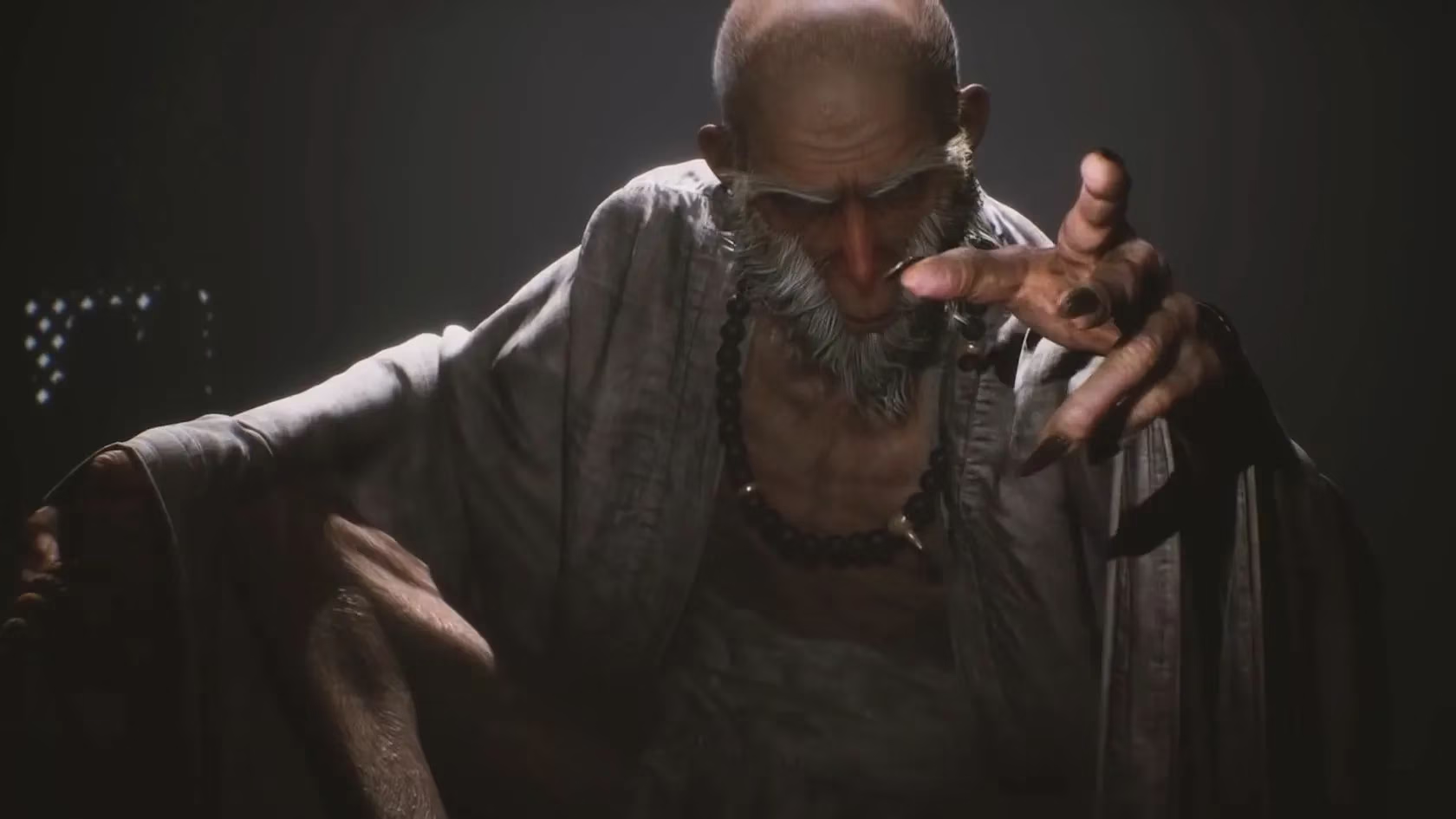
The artistic heart of this burgeoning legend beats on the Artstation profile of Yang Qi, the game's art director. Here, what are casually labeled as "sketches" are, in truth, windows into a fully realized, emotionally resonant world. These are not mere drawings; they are stories frozen in ink and color, each one a poignant fragment of a larger, tragic mythology. They possess a narrative weight that transcends their medium, offering glimpses of characters whose lives are defined by love, duty, and immense, crushing loss.
Among these treasures, two pieces stand in stark, powerful contrast—a diptych of familial bonds, one absurd and endearing, the other steeped in eternal grief. They are masterclasses in visual storytelling, saying more in a single image than pages of text ever could.
🐀 A Tale of Two Rodents: Family, Duty, and a Handsome Brother
The first story is told in two parts, under the deceptively simple title “Rat son, rat father, and handsome brother.” The description is a masterpiece of nonchalance: “The one in his arms is the father.” This throwaway line lands with the force of a revelation, reframing the entire scene with heartbreaking clarity.
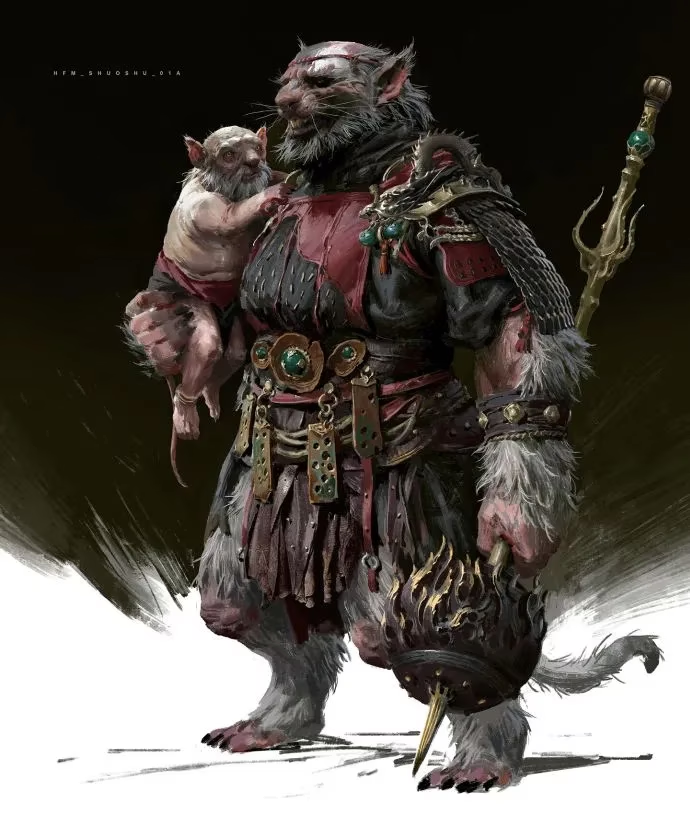
In the first image, we see the Rat Son. He is immense, muscular, and clad in rugged armor. In his powerful arms, he cradles a much smaller, elderly, and utterly exhausted rat—his father—with a tenderness that belies his formidable appearance. The father is swaddled like a precious, if weary, burrito. The son's expression is one of immense, stoic pride. This is his charge, his responsibility, and he bears it with solemn dignity. The dynamic it suggests is instantly compelling. Is this a act of filial piety in a dangerous world? Is the father a revered elder, or a burden to be protected?
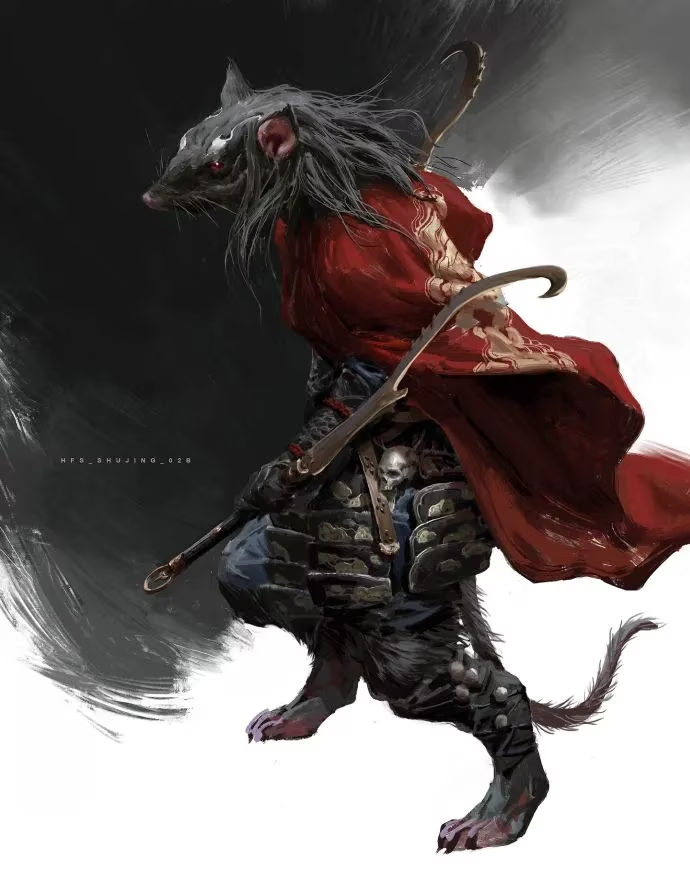
The answer, perhaps, lies with the Handsome Brother. The scene shifts to this other sibling, and the mood changes palpably. Here stands a figure of deadly seriousness. His cape billows with dramatic intent, a skull grins where a face should be, and his posture is that of a warrior poised to strike. He is ready to "shank," as the observer aptly notes. The contrast between the caring son and the militant brother paints a vivid picture of a family unit forged in adversity. One nurtures, the other defends. One carries the past, the other confronts the future. The questions multiply: What threat necessitates such a division of labor? Could the gentle giant one day use his frail father as an unconventional projectile in a desperate boss fight? The art does not answer; it only invites one deeper into the mystery.
💔 The Agony of the Beast: A Skeleton Named "Ex-Wife"
If the rat family evokes a strange warmth, the next piece, titled “Ex-wife,” plunges the viewer into the depths of pure, unadulterated pathos. The mood shifts from quirky familial drama to epic, timeless tragedy.
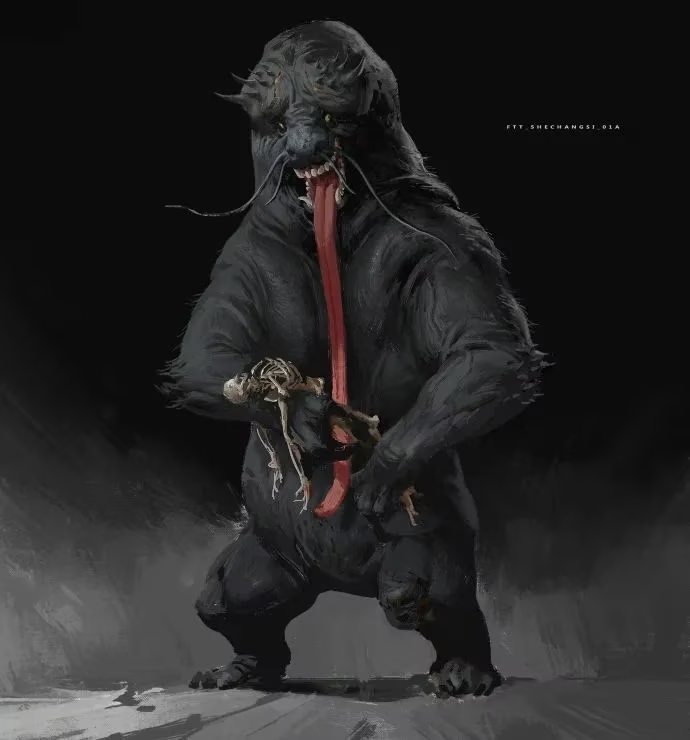
Here lies a humongous, dark-furred beast, its form suggesting immense power now turned inward upon itself. Its tongue lolls not in menace, but in an expression of profound exhaustion or grief. And in its arms, held with a stiff, agonizing care, are bones. The skeleton of its mate. The title, "Ex-wife," is a devastating piece of narrative shorthand. This is not a wife lost to divorce, but to death—she is forever former, forever gone. The beast’s posture is not one of embrace, but of propping up, of desperately maintaining a connection that has long since turned to dust. It mourns not with roars, but with this silent, eternal vigil. The image asks a sorrowful question: Where does such a story even begin? What love existed between this monstrous form and its now-skeletal partner? What cataclysm or betrayal led to this moment of frozen despair? It is a portrait of love that outlives the body, of grief that has become a permanent state of being.
✨ The Promise of a Digital Epic
As of 2026, the anticipation for Black Myth: Wukong has only deepened, sustained by these profound artistic visions. The game represents more than just a thrilling combat experience; it is a gateway to a rich cultural mythology, rendered with an emotional intelligence rarely seen. The journey to meet the stoic rat family and to perhaps offer a moment of solace to the grieving beast has become a poignant personal quest for many awaiting the game's release.
The art of Yang Qi does not just sell a game; it builds a world. It suggests a universe where every enemy has a history, every boss fight a heartbreaking context. It promises a semester of fascination within its finished realms. Until the day one can finally step into the shoes of the Monkey King, these concept pieces remain as powerful totems—dreams of what may come, and haunting reminders of the stories waiting to be lived. For now, we can only browse, wonder, and dream within these beautifully sketched whispers of myth.