
Since Game Science first revealed Black Myth: Wukong in 2020, fans and industry observers have repeatedly asked whether the game belongs to the Soulslike family. The comparison is natural: the combat system relies on strikes, dodges, and a stamina meter; shrines function as checkpoints; defeated enemies return when the player rests or dies; and some experience can be lost on death. However, after the game launched on 20th August 2024 for PS5, Xbox Series X/S, and PC via Steam, those early assumptions looked more like shorthand than a complete description. As of 2026, Black Myth: Wukong is still best understood as a cinematic action RPG with Soulslike seasoning, not a faithful clone of FromSoftware's template.
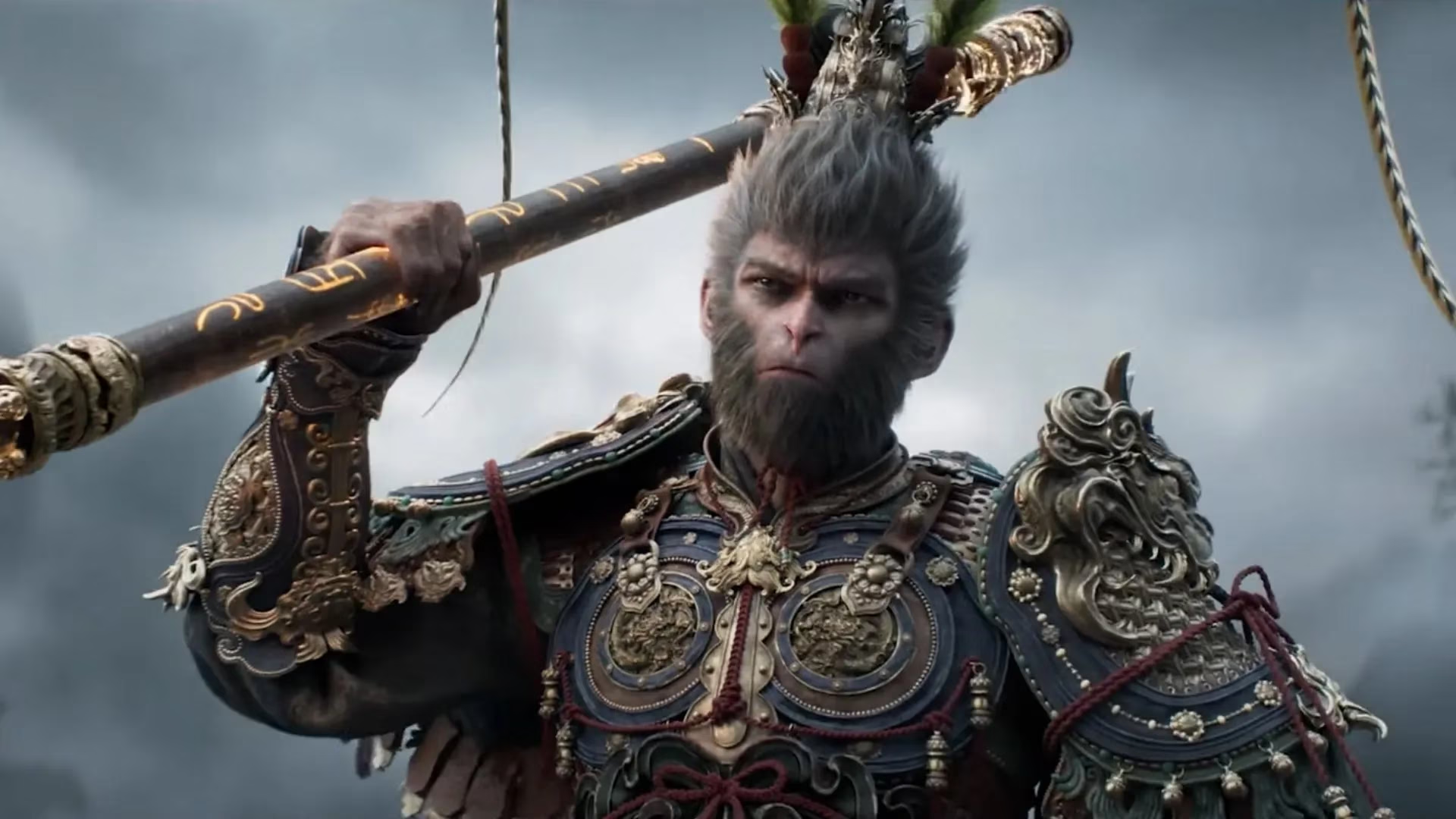
Some of that distinction depends on definitions. Wukong certainly shares hallmarks with Dark Souls, Bloodborne, and Elden Ring: melee combat governed by stamina, restorative shrines, respawning enemies, and consequences for death. Yet Game Science has consistently called the project a broader action RPG, highlighting spells, transformations, and the freedom to develop individual fighting styles. That is not merely marketing language. During hands-on time with a preview build, it became clear that combat is precise yet fast, with an emphasis on evasion rather than blocking. The Monkey King's staff attacks flow into dodges, spins, and twirls that make encounters feel closer to Wuxia action choreography than the methodical pace of a traditional Souls game.
To clarify the hybrid identity, several common Soulslike traits can be compared:
| Feature | Traditional Soulslike | Black Myth: Wukong |
|---|---|---|
| Stamina-based combat | Common | Present |
| Checkpoint shrines | Core | Similar |
| Experience loss on death | Frequent | Present but gentler |
| Pause option | Rare | Available |
| Character build variety | High | More limited |
| World structure | Looping/open | Predominantly linear |
| Narrative presentation | Fragmentary lore | Explicit cutscenes |
Spells, Transformations, and Combat Rhythm
Game Science built the action around options that let players adjust to combat rhythm rather than simply memorizing attack patterns. The Red Tides ability, earned by defeating the optional Yaoguai boss named Guangzhi, temporarily shifts the protagonist into a flaming wolf form. That transformation carries a separate health bar, which means it is not only a new moveset but also a survival tool. Meanwhile, the immobilize spell can freeze opponents for a few precious seconds, opening a window for uninterrupted damage before the cooldown cycle forces planning and restraint.
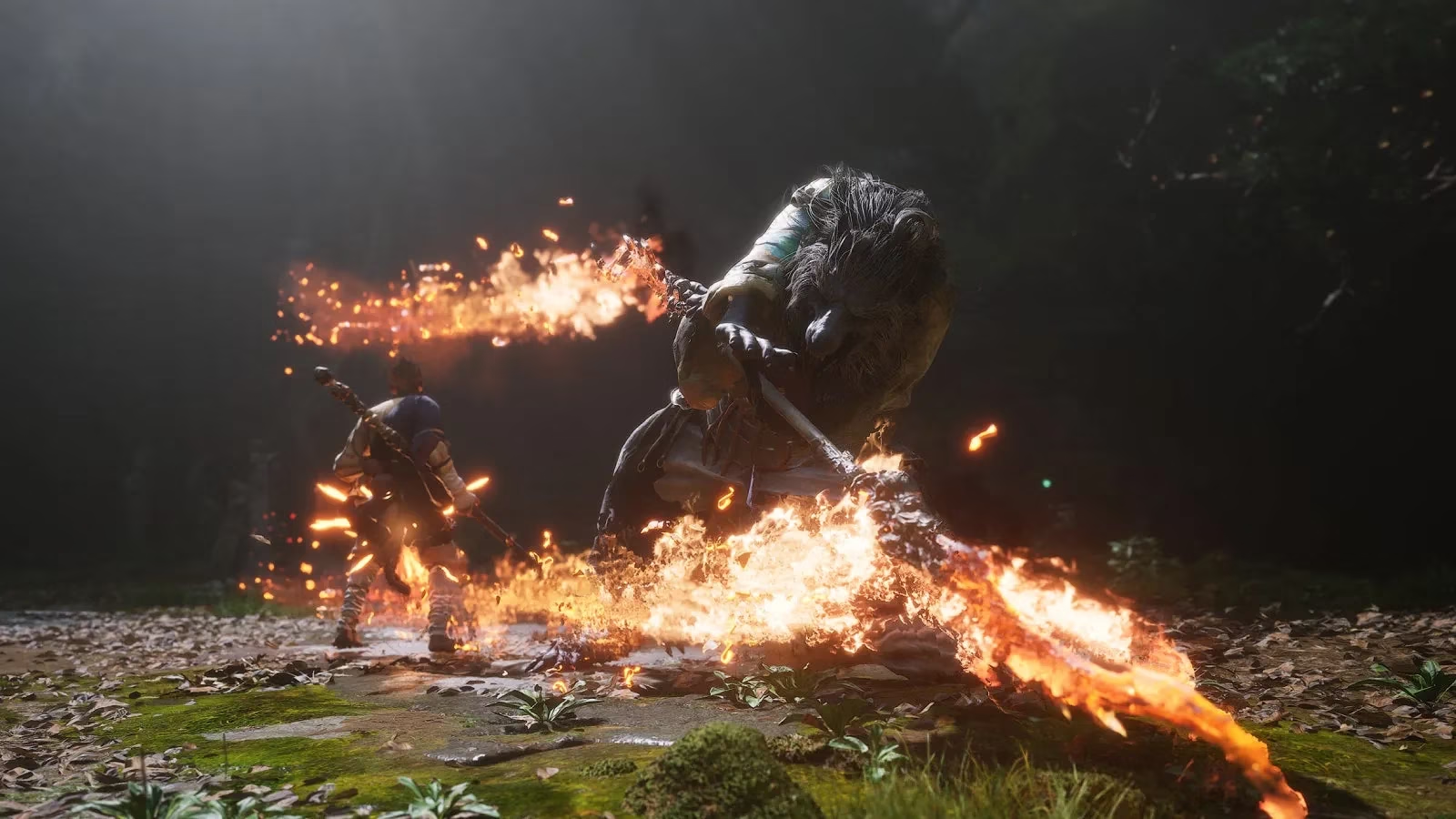
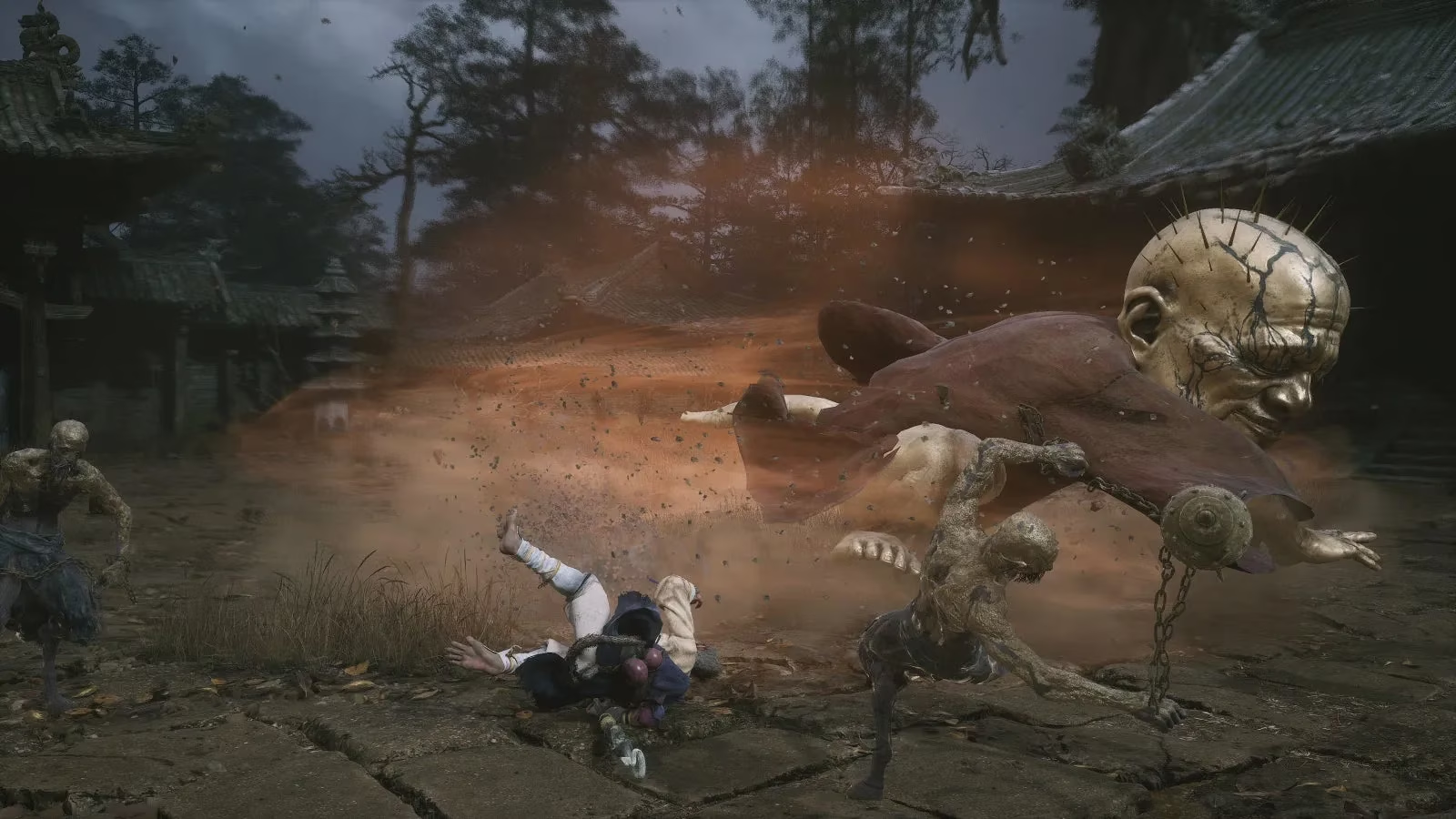
These tools partly explain why Game Science does not see Black Myth: Wukong as an ultra-hard experience. Studio representatives observed that many players find action games frustrating because they cannot keep up with the tempo of battle. Instead of punishing every mistake, Wukong offers different spells, transformations, and a less crushing rhythm so that players can enjoy both the story and the combat. Optional challenges still exist, including a giant-headed enemy that could prove too strong at an early stage and was better avoided until later.
Narrative Roots and Difficulty Philosophy
Unlike FromSoftware's oblique environmental storytelling, Black Myth: Wukong wears its narrative more openly. The game is inspired by Journey to the West, the 16th-century Ming dynasty epic featuring Sun Wukong, often known as the Monkey King. Its story unfolds after the events of that novel, preserving familiar relationships while sending the hero into battle against monstrous Yaoguai. Cinematic introductions establish environments and bosses, though early chapters kept the plot intentionally sparse while Game Science adjusted pacing. The studio said its goal was to tell a complete story about characters, not simply to deliver isolated lore fragments.
Because Journey to the West has already influenced everything from television adaptations to Ninja Theory's Enslaved: Odyssey to the West and Akira Toriyama's Dragon Ball, the source material offers rich cultural resonance. Game Science used that foundation freely, creating battle scenes where Wukong faces Yaoguai to immerse players in a mythological version of ancient China rather than a purely archaeological adaptation.
Level Design: Linear Paths, Stunning Scenery
Level design is where the non-Soulslike identity becomes most obvious. FromSoftware titles often rely on intricate, looping spaces or vast open fields. Wukong, by contrast, offers predominantly linear progression: forest trails lead into wide arena-like clearings, with only occasional branching paths and optional boss encounters. Game Science confirmed the game is propelled by storyline rather than open-world exploration, though some levels are larger than others. Between major battles, smaller enemies patrol the woods and collectible materials appear, but exploration feels more directed than labyrinthine.
Visually, however, the world is striking. Bamboo groves, hidden waterfalls, lush undergrowth, and soft lighting showcased Game Science's mastery of Unreal Engine 5, transforming the studio's earlier mobile expertise into a console-scale spectacle. At one point, the monkey protagonist briefly morphs into a cicada to slip past enemies, though this functions as a scripted moment rather than a recurring traversal puzzle.
Boss Encounters Steal the Show
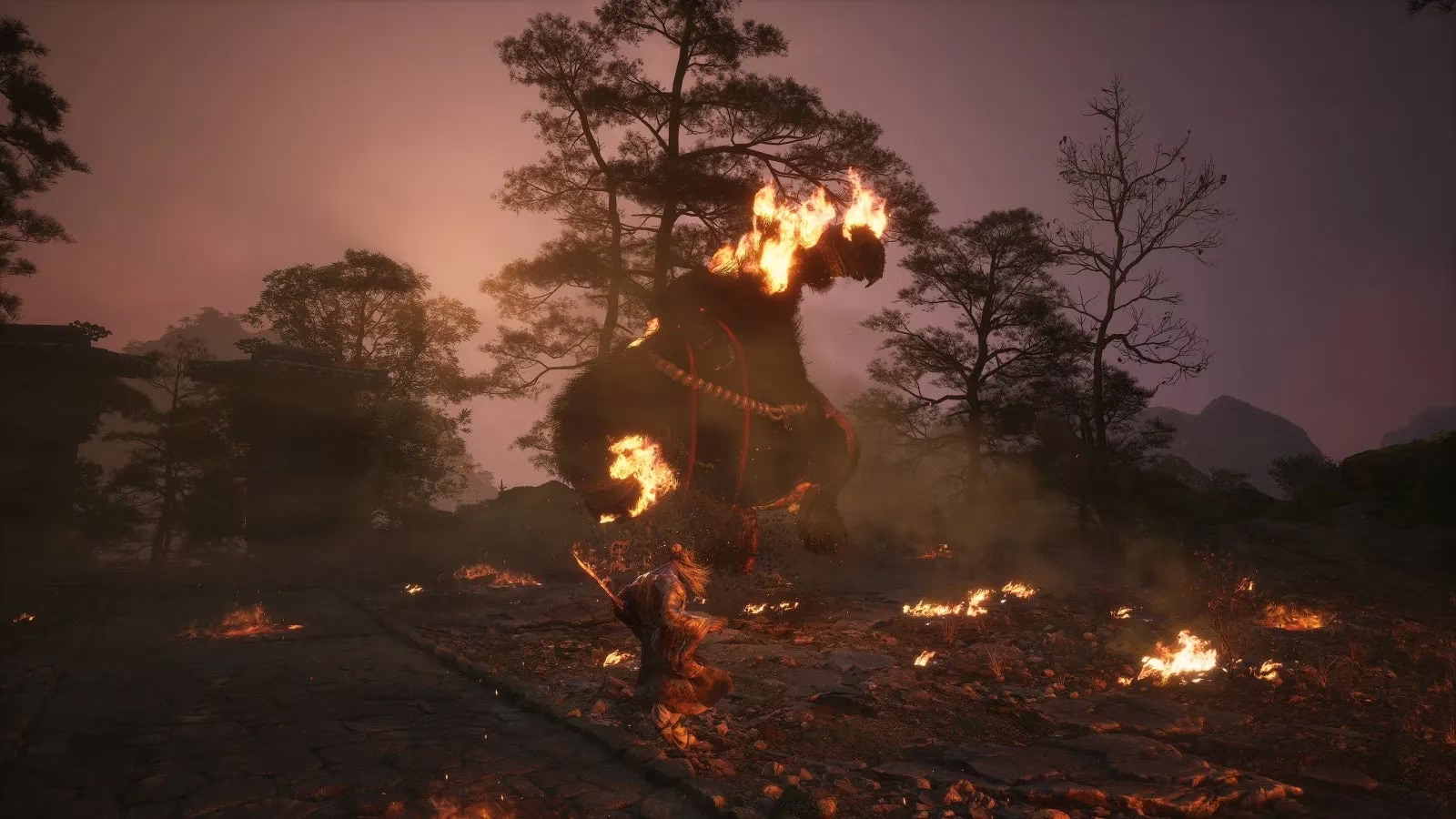
The Yaoguai bosses are the magnetic center. During the preview, large opponents ranged from martial masters to giant wolves and noble adversaries, each introduced with cinematic confidence. Fights carry a balletic tension: staff held low, enemies circling, water rippling, and leaves fluttering with each movement. These duels deliver sweaty palms and pounding hearts, offering familiar thrills even if the surrounding structure lacks FromSoftware's spatial complexity.
A Lasting Place in the Action RPG Landscape
When Black Myth: Wukong arrived in August 2024, it did so under intense scrutiny. Ahead of launch, it had become Steam's most wishlisted game, even as Elden Ring: Shadow of the Erdtree dominated conversations that summer. Game Science viewed the competitive landscape as healthy, noting that the RPG market is large enough for multiple high-profile titles. At the same time, reports about misogynistic social posts from leadership circulated across major outlets, and during the early hands-on session the studio did not answer questions on that topic. That controversy remained part of the discourse around the game's launch.
In 2026, the classification debate still matters because it helps players understand what Wukong offers: a cinematic, story-propelled action RPG with Soulslike elements, spectacular boss fights, elegant movement, and a stunning rendition of Chinese mythology. It may not be a true Soulslike, but it does not need to be. Early impressions came from a demo build and were not guaranteed to reflect final game features, yet the core identity described by Game Science has remained central to how Black Myth: Wukong is remembered and played.
The above analysis is informed by writing from Game Developer (formerly Gamasutra), a long-running industry publication that often explains how mechanics and structure choices shape player expectations. In the case of Black Myth: Wukong, viewing it through a developer-lens helps clarify why its stamina-and-shrine similarities to Soulslikes can coexist with more cinematic storytelling, spell-driven tempo control, and predominantly linear levels—design decisions that steer the experience toward an action RPG identity rather than a strict FromSoftware-style formula.