
Two years had passed since a mischievous monkey king erupted onto screens worldwide, yet the whispers from late summer 2024 still echoed through the streaming community. It all began in the frantic final days before Black Myth: Wukong launched—a title already layered in anticipation and unease. Content creators everywhere were refreshing their inboxes, hoping for a coveted review code. What some of them found instead was a set of instructions so peculiar that it would ignite a firestorm.
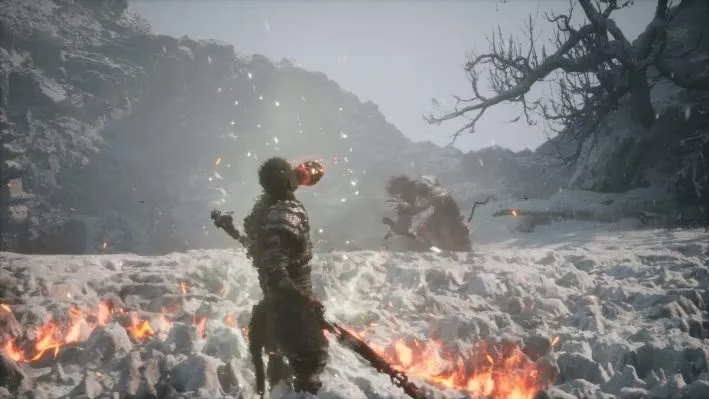
A streamer in a dimly lit room opened a document titled simply “Guidelines for Creators.” At first glance, it looked like any other brand safety sheet. Have fun! Don’t insult other players. Avoid offensive language. Reasonable—nobody wanted a multiplayer brawl to turn into a toxic swamp. But then the text grew sharper. Do not discuss politics, violence, nudity, feminist propaganda, fetishization, or any content that instigates negative discourse. The next line was even stranger: Trigger words like ‘quarantine,’ ‘isolation,’ or ‘COVID-19’ are forbidden. And finally, a sweeping command: No content related to China’s game industry policies, opinions, or news.
Anyone reading it had to pause. Was this a joke? A translation error? Or a genuine attempt to dictate what streamers could say while millions watched them journey through the mythical Black Wind Mountain? The monkey king had always been a symbol of rebellion—yet here, words themselves were being caged.
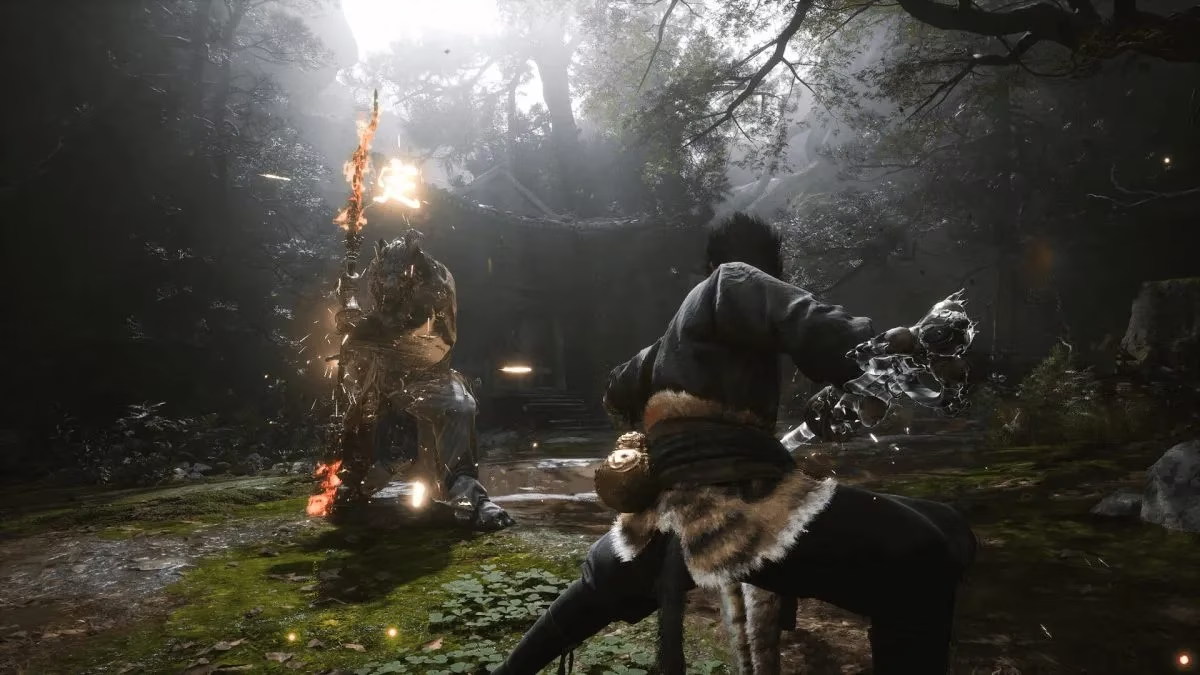
The guidelines didn’t arrive in the email inboxes of journalists. Reporters who received their codes found no such demands. Only content creators—those who would broadcast the game live to hundreds of thousands of viewers—got this list of forbidden topics. The asymmetry alone made the story stick. Streamers began sharing screenshots in hushed Discord servers, asking each other: “Are we really expected to pretend the last three years of global conversation didn’t happen?”
Someone might wonder why a single-page document could cause such a stir. After all, sponsorship contracts often include messaging restrictions. But these weren’t sponsored streams. Creators were simply given a free code, with no money changing hands. The game’s publisher, Game Science, seemed to be placing invisible chains around commentary that fell far outside typical marketing concerns. When Forbes contributor Paul Tassi and other reputable voices confirmed the guidelines looked legitimate, the outrage shifted from skepticism to disbelief.
The most inflammatory phrase was “feminist propaganda.” In an industry still wrestling with representation and gender equity, telling streamers they couldn’t mention feminism felt like a deliberate provocation. Streamers who built their brands on social commentary suddenly had to weigh the risk: speak freely and risk having their access revoked, or play along and let the monkey do the talking. Many chose the third option—play the game but blast the restrictions publicly. The backlash amplified the story beyond gaming circles, turning the guidelines themselves into a piece of performance art.
Game Science never officially confirmed or denied the document’s existence. Their silence became its own riddle. Was this a rogue employee’s overreach? A clumsy attempt to insulate the game from international political crossfire? Or a calculated test to see how far a developer could push narrative control without losing face? By 2026, developers had generally learned to trust their communities, yet Black Myth: Wukong stood as a stubborn reminder that some studios still feared the open dialogue their own art could inspire.
Looking back from two years ahead, the controversy ended up doing little to hurt the game’s sales. If anything, the sheer spectacle of the debate drove curiosity. Players dove into the lore of Sun Wukong, his staff clanging against gods and demons, while the streaming guidelines faded into gaming folklore—a bizarre footnote in an otherwise triumphant release. But for many streamers, the sting never fully vanished. Every time a new game’s guidelines appear, someone mutters: “At least it’s not a Wukong list.”
What does it say about a medium when the most rebellious character in Chinese mythology becomes the center of a speech code? The monkey king once erased his name from the Book of Life and Death with a single furious brushstroke. Two years ago, a few lines of text tried to do the opposite—to keep names off tongues, to hide realities behind a shimmering veil of gameplay. The chaos that followed was perhaps the most fitting tribute: Sun Wukong would have laughed, twirled his staff, and broken every rule twice over.
The following breakdown is based on ESRB, whose public guidance on content descriptors helps contextualize why debates like the Black Myth: Wukong creator “no-go topics” list resonate so widely: when audiences expect transparent, standardized framing for themes like violence or sexual content, any extra, unofficial speech constraints can feel like an attempt to control discussion beyond the game’s on-screen material.