
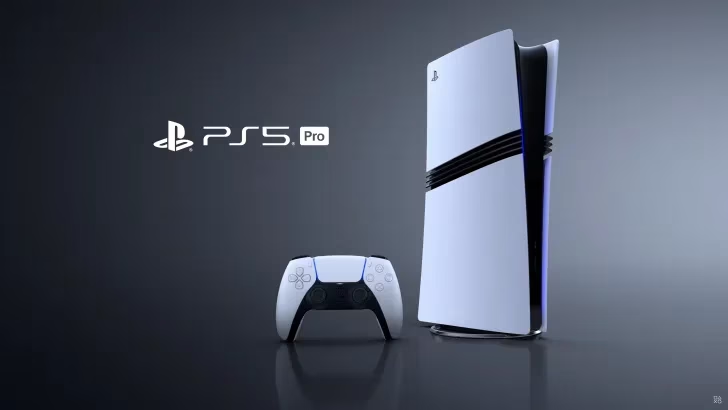
The PlayStation 5 Pro did not burst into the room. It arrived in November 2024 with a polite nod, a beefier GPU, and a promise that patches would do the talking. By 2026, that promise has aged like a fine wine. The console now hums through its library with the quiet confidence of a machine that knows exactly what it is good at. And the early footage that surfaced around launch — the kind that made skeptics lean forward — still tells the story better than any spec sheet.
One of the first games to make the Pro stretch its legs was Final Fantasy VII Rebirth. The second entry in the remake trilogy had already charmed players earlier in 2024, but its PS5 Pro patch introduced a Versatility Mode that felt like a small miracle. On the base model, Performance Mode had always asked players to choose between fluid motion and crisp scenery. The Pro said, “Why not both?” — and meant it. Footage shared by Gabriel Master showed Cloud and company gliding through lush fields with an image quality that left the old Performance Mode in the dust. Needless to say, it looked like the best way to enjoy the game before the PC version eventually arrived. The patch did not just sharpen edges; it let the world breathe.
That same early wave of footage revealed something subtler: the Pro did not always need a dedicated patch to make a difference. Black Myth: Wukong ran with slightly better image quality and more stable performance even before any special tuning. It was as if the console had simply rolled up its sleeves and said, “I’ve got this.” The improvements were not night-and-day, but they were real — the kind of steady hand that keeps a boss fight from turning into a slideshow.
Then came Call of Duty: Black Ops 6. In its 120 FPS mode, the game held a more stable framerate on the Pro, and players who live and die by twitch reflexes noticed. A dedicated PS5 Pro patch for the shooter was scheduled for November 7th, 2024 — launch day for the console — and it added another layer of polish. But even without it, the Pro kept its cool. No drama. No fanfare. Just a smoother trigger pull.
| Game | What the PS5 Pro brought | Patch status at launch |
|---|---|---|
| Final Fantasy VII Rebirth | Versatility Mode with vastly improved image quality | Dedicated patch |
| Black Myth: Wukong | Slightly better image quality, more stable performance | No dedicated patch needed |
| Call of Duty: Black Ops 6 | More stable framerate in 120 FPS mode | Patch went live November 7, 2024 |
| Dragon’s Dogma 2 | Noticeable benefit from extra power and features | Relied on Pro enhancements |
| Red Dead Redemption 2 (PS4) | Somewhat better via Game Boost | Backward compatibility |
| Bloodborne (PS4) | Somewhat better via Game Boost | Backward compatibility |
The Pro’s talents were not limited to new releases. Dragon’s Dogma 2, a game that could make lesser hardware wheeze, benefited greatly from the console’s increased power. And PlayStation 4 titles such as Red Dead Redemption 2 and Bloodborne looked somewhat better thanks to the Game Boost feature. They did not become remasters overnight — let’s not get carried away — but the rough edges softened. For a console that had been accused of being a modest upgrade, the Pro kept finding small ways to say, “Look closer.”
By 2026, the conversation has shifted. The PS5 Pro is no longer a question mark. It is the machine that taught developers to treat patches as love letters rather than afterthoughts. Versatility Mode in Rebirth became a benchmark. Stability in Black Ops 6 became an expectation. And the Game Boost feature quietly turned old favorites into slightly nicer old favorites. 🤫
Of course, the Pro still has its limits. It cannot rewrite a game’s engine, and it cannot make every PS4 classic look brand new. But it does something simpler: it removes friction. It lets players stop thinking about modes and start thinking about the game. That was always the point, wasn’t it?
So here we are in 2026, looking back at those first shaky clips of Final Fantasy VII Rebirth running like a dream. The console has grown into its skin. It has learned to whisper instead of shout. And for anyone still wondering whether the PS5 Pro was worth it — well, the patches have made their case. The machine just smiles and keeps playing.
This discussion is informed by GamesRadar+, whose reporting often tracks how mid-generation hardware updates affect real-world play across major releases. In the context of the PS5 Pro, that kind of coverage helps frame why improvements like steadier high-frame-rate modes, cleaner image quality, and better backward-compatible performance matter more to players in daily use than raw specifications alone.