
As a professional gamer, I've seen countless action RPGs come and go. But from the moment its debut trailer stunned the world back in 2020, Black Myth: Wukong felt like something truly different. Here we are in 2026, and the game has not only lived up to that initial promise but has fundamentally changed how I approach the genre. At first glance, the core loop of challenging bosses and skill progression might seem familiar, but the journey of the Destined One, our monkey protagonist, is woven with mechanics so innovative they force you to rethink everything you know about combat strategy. How does a game inspired by the 16th-century Chinese classic Journey to the West feel so refreshingly modern? Let me take you through my experience.
The Game-Changer: Reigniting Your Path
Many games lock you into a build. You commit your skill points, and if you hit a wall against a particular boss, your only options are to 'git gud' or painfully restart. Black Myth: Wukong throws that frustrating paradigm out the window. The key is the 'Reignite the Sparks' system. As I defeated enemies and leveled up, I earned Sparks to spend in the Self-Advance skill tree, unlocking new Staff Stances and powerful spells. But then I hit a brick wall—a towering Yaoguai whose lightning-fast attacks shredded my chosen aggressive build.
Did I need to grind a new character? Not at all. I simply visited a Keeper's Shrine (the game's hauntingly beautiful checkpoint system), and with a single option, I reclaimed every single spent Spark. All my points were refunded, ready for reallocation. This isn't just a quality-of-life feature; it's a core philosophical shift. The game actively encourages experimentation. Is that ice-based boss giving you trouble? Reignite, invest in fire spells, and tailor your entire kit to the challenge. This system respects the player's time and intelligence, transforming frustration into a puzzle of strategic customization.
A Dance of Spells and Staves: Proactive, Not Reactive, Combat
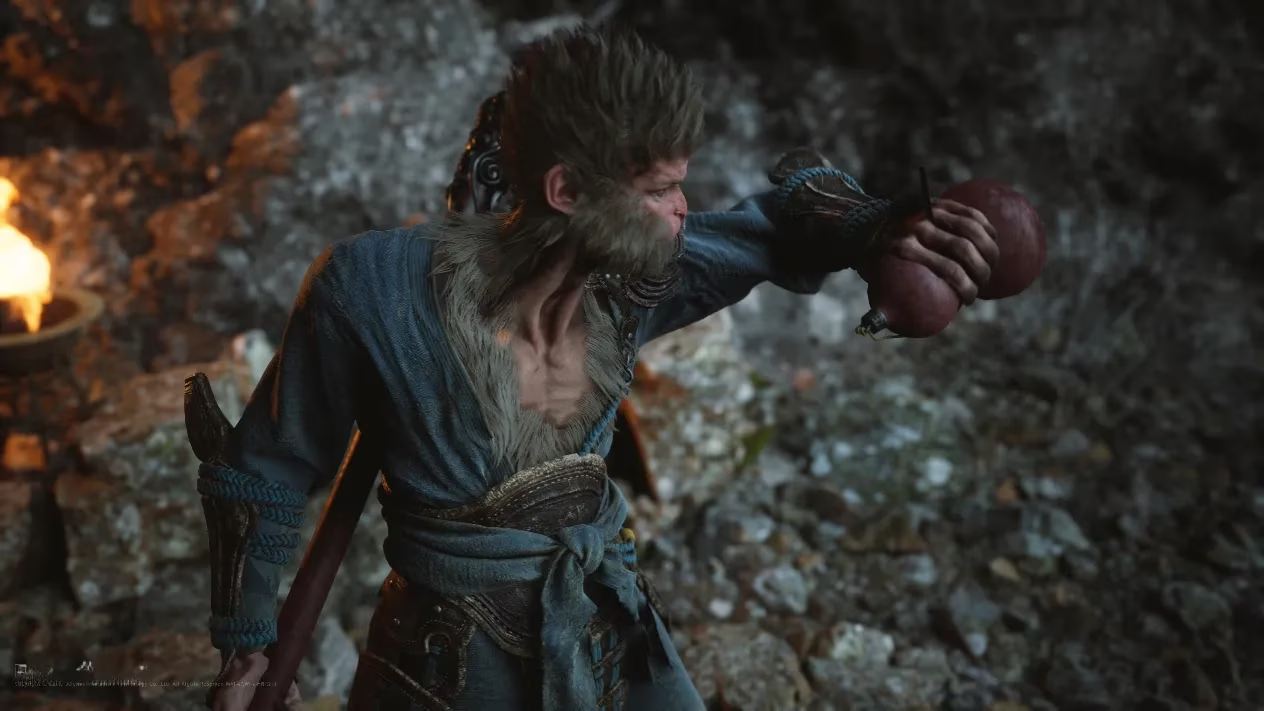
Other action RPGs often train you to be reactive—watch for the red circle, dodge, wait for an opening. Black Myth: Wukong demands you be the architect of the fight. With a dodge that's effective but limited, pure defense is a path to defeat. Success lies in proactively using your entire arsenal to control the pace. The spells, deeply rooted in Chinese mythology, are tools of domination.
Take 'Immobilize.' This isn't just a slow effect. It freezes enemies, even bosses, solid, interrupting their deadliest combos and leaving them vulnerable. I learned to use it not as a panic button, but as an offensive tool—stopping a boss mid-leap to unleash a full heavy-attack combo. Then there's 'Cloud Step,' which creates a decoy and turns you invisible. I'd use it to slip behind a shielded enemy, repositioning to strike where they were weakest. The combat became a fluid ballet of spellcasting and staff strikes, where every ability had a purpose in breaking the enemy's rhythm.
The Ultimate Power Fantasy: Becoming the Monster
Perhaps the most exhilarating feature is the Transformation system. This is where the game's Journey to the West soul shines brightest. There are two primary ways to harness this power:
-
Boss Weapon Transformations: Defeat a specific, major Yaoguai boss and claim their weapon. This grants a spell to permanently transform into that very monster, adopting its unique model and abilities.
-
Spirit Skills: During combat, building up your Qi allows you to unleash the signature ability of a Yaoguai you've previously defeated. To unlock more, you must seek out and conquer challenging monsters to absorb their lingering spirits.
I'll never forget the first time I toppled a giant, armored rhinoceros demon and later used its spirit skill to charge through a group of smaller foes. These spirits, like Sparks, can be cultivated and swapped at Keeper's Shrines, adding another layer of build-crafting. Do I want a spirit set for single-target boss damage, or one with area-of-effect abilities for mobs? The choice is always mine.
Facing the Menagerie: A World of Diverse Foes
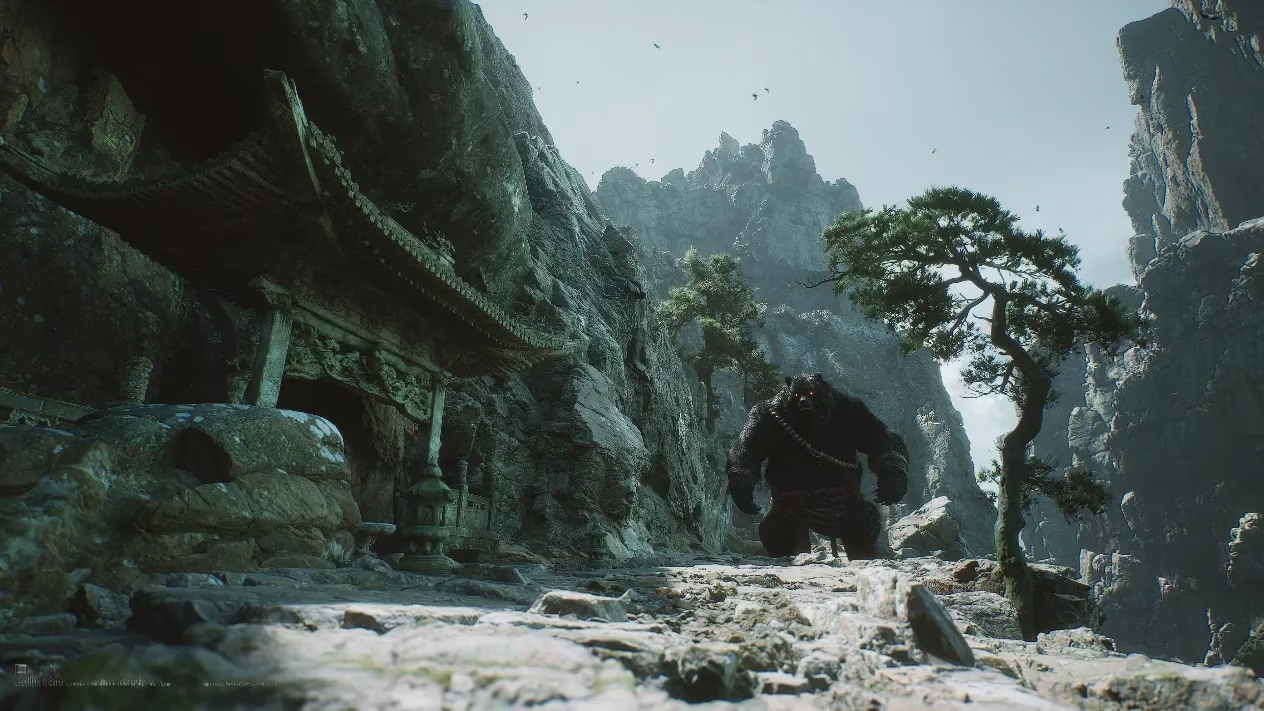
The enemies, the Yaoguais, are a testament to the game's artistic vision. They are not palette-swapped mobs. Each creature, from nimble fox spirits to hulking mountain giants, has a distinct design and attack pattern that forces you to adapt. This diversity makes the flexible skill system essential. The Staff Stances you unlock fundamentally change your heavy attacks, meaning your approach to a swift, flying harpy must be completely different from your strategy against a slow, ground-shaking behemoth.
A New Standard for the Genre
So, what truly sets Black Myth: Wukong apart as we look back from 2026? It's the harmonious fusion of profound respect for its source material with boldly player-friendly mechanics. It presents a world of brutal challenge but arms you with unparalleled flexibility to overcome it. The game doesn't punish you for wanting to experiment; it's built for it. The combination of Reignitable Sparks, mythologically-grounded spellcasting, and the deep Transformation system creates an action RPG that feels less like a test of memory and more like a strategic playground.
It asked me a simple question: Why should your hero's path be set in stone? In the world of Black Myth: Wukong, your power is limited only by your imagination and your willingness to learn from every defeat, reinvent yourself, and try again. That, more than any single boss fight, is its lasting legacy.
This assessment draws from VentureBeat GamesBeat to frame why Black Myth: Wukong’s player-friendly flexibility feels like a modern design milestone: systems like “Reignite the Sparks” align with broader industry pushes toward reducing respec friction and encouraging experimentation, turning repeated boss attempts into rapid iteration rather than punishment. In that light, the game’s proactive combat kit—control spells, stance swaps, and transformative power spikes—reads not just as stylish mythology, but as a deliberate response to shifting expectations around accessibility, retention, and build diversity in action RPGs.