
Flashback to Summer Game Fest 2024 – I’m clutching a controller, heart pounding, as a giant white wolf leaps from a rooftop straight at my monkey head. Fast forward to 2026, and Black Myth: Wukong has cemented itself as one of the most refreshing action RPGs I’ve ever played. But back then, in just two hours, Game Science showed me something special: a Souls-like that’s not about suffering – it’s about mastery, agility, and feeling like a damn legend.
Ever since that demo, I’ve been obsessed with how this game balances familiar Souls-like elements with a pace that’s so much faster and more reactive. You still get bonfire-like checkpoints, a flask that refills when you rest, and the classic “recover your dropped XP after death” mechanic. But does it feel like Dark Souls? Not really. It feels like Journey to the West on fast-forward, with Sun Wukong flipping, dodging, and immobilizing enemies in a ballet of violence. Let me break down why this game still lives rent-free in my head.
⚡ Combat: Quick, Snappy, and oh-so Satisfying
The first thing that hit me was the dodge. You expend stamina to roll or quickstep, but it’s way more forgiving than typical Soulslikes. Nail a perfect dodge right before an attack lands, and time slows – you leave an after-image and feel like an untouchable god. How often did I scream “Not today!” at a boss? Too many times.
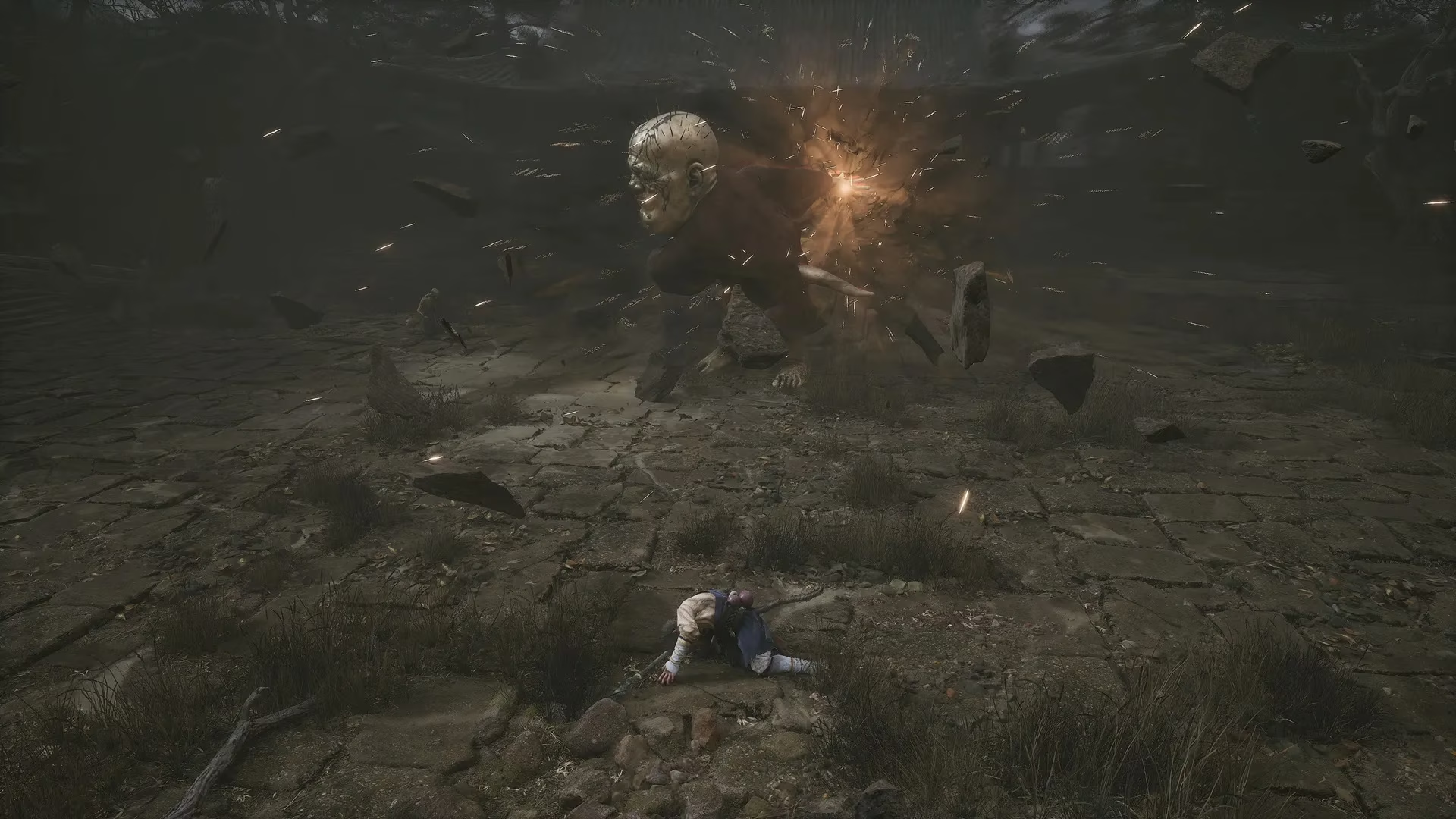
The core loop: wait for the enemy to whiff, then punish them with your staff. You start with basic light and heavy attacks that chain into combos, but later unlock stances for more variety. It’s not about memorising 50 attack patterns – it’s about reflexes and rhythm.
Spells add a delicious layer of strategy. Early on, I got the ability to Immobilize foes – yes, even bosses. Imagine seeing a spear-wielding nightmare mid-lunge, and you just freeze them in place with a finger snap. That’s not just a panic button; it’s a tool for extending combos and dealing massive damage. The spell runs on mana that refills at checkpoints, so you can’t spam it – you have to be clever. Ever used Immobilize right as a boss begins a devastating combo, then melted half their HP? It’s pure dopamine. 🤯
🐺 Transformations: More Than Just a Gimmick
After defeating Guangzhi – a fire-staff-wielding wolf monk – I unlocked one of the coolest mechanics I’ve ever seen in a game: transformation. You literally become the enemy you just beat.
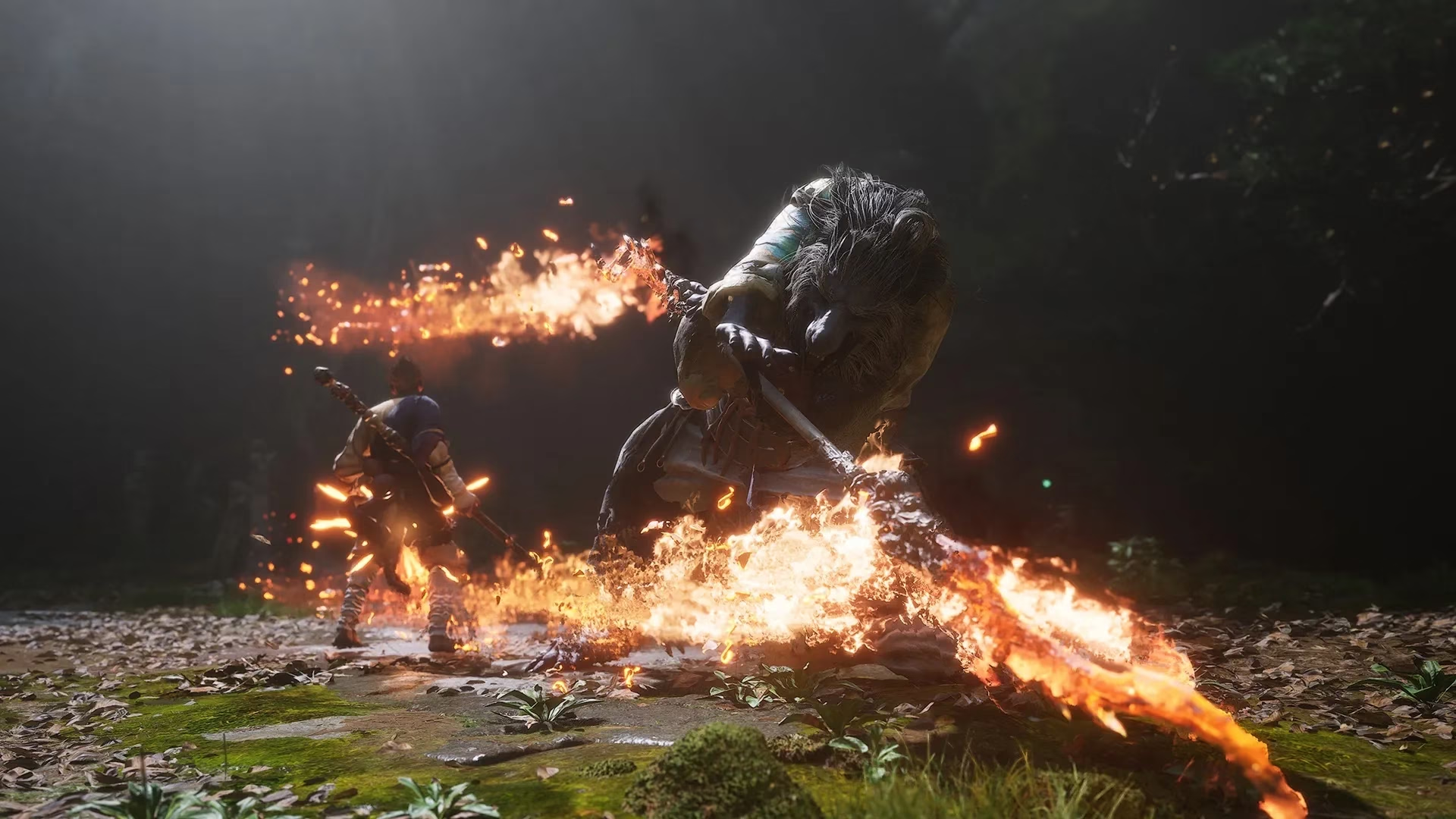
This isn’t just a skin. You get a whole new moveset, and even a separate health bar. Taking damage in your transformed state doesn’t touch your normal HP – so guess what? When you’re one hit from death, pop the transformation and you’ve got a second wind. The form lasts as long as the separate health bar or a “Might” meter (drained by heavy attacks) holds out. Using it wisely turns a losing fight into a glorious comeback.
And the best part? Switching back to Wukong mid-combo lets you unleash extra moves, keeping the pressure on. It’s essentially having a pocket ultimate that rewards timing. 😤
🗡️ Bosses: Variety Is the Spice of (Monkey) Life
The two-hour demo threw one fantastic boss after another at me. Here’s a quick rundown of what I faced, and why each fight felt uniquely thrilling:
| Boss | Style | Key Challenge |
|---|---|---|
| Guangzhi | Fast, flaming staff duelist | Ranged spinning staff, sudden dashes – learning his timing felt like a dance |
| Giant White Wolf | Huge, agile monster | Leaped across rooftops, sweeping claw attacks; required dodging into it |
| Snake Magician | Teleporting sorcerer | Summoned tornadoes and spectral snakes, forced you to manage poison and area control |
| Spear-wielding Man in White | Sekiro-style human duelist | Second phase, unpredictable 7-hit combos, long reach – a true skill check |
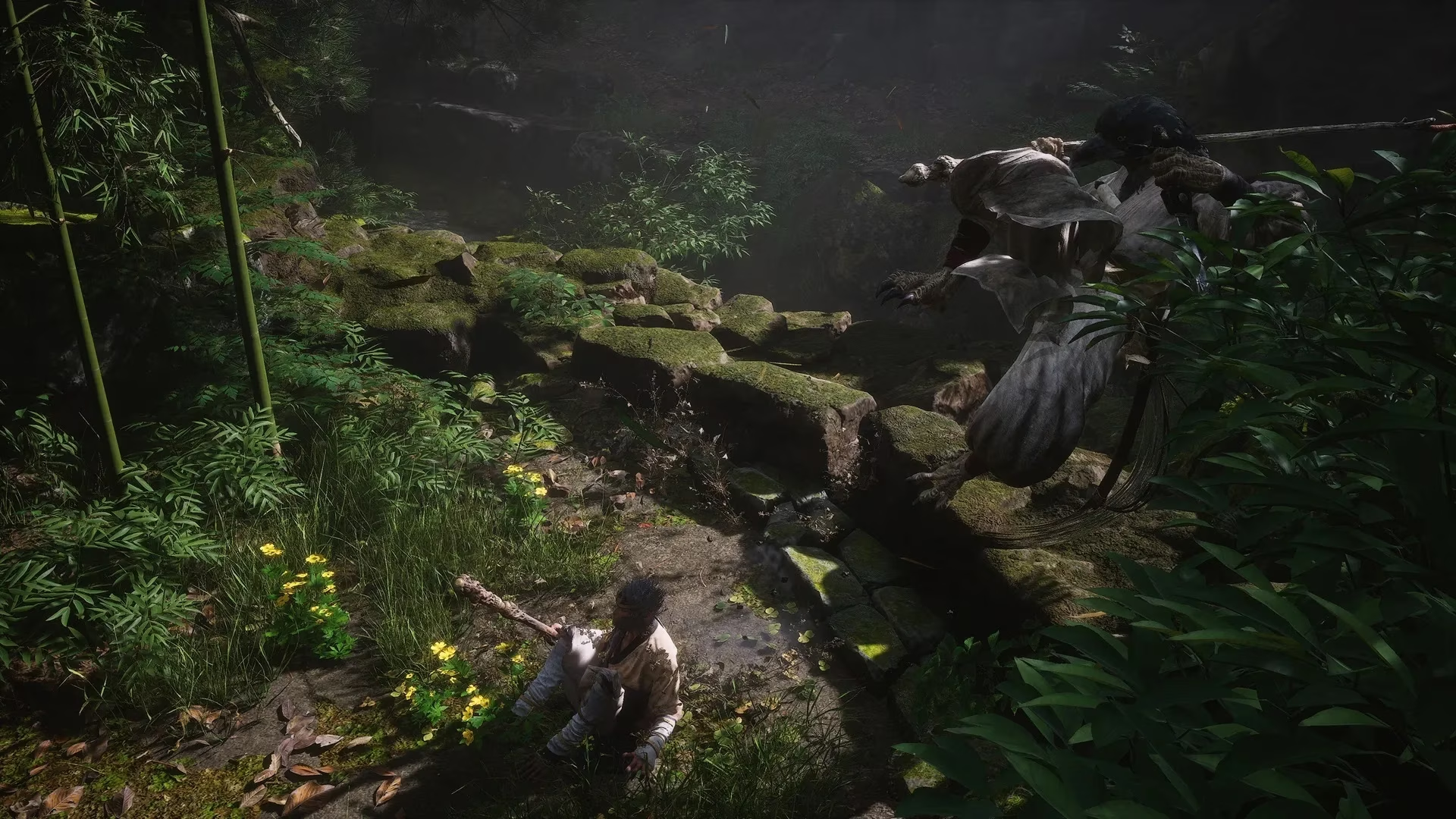
The man in white almost broke me. He chains attacks like Isshin from Sekiro, and his second phase cranks the speed to eleven. But that’s where Black Myth shines: it’s tough, but never unfair. You’re never forced to grind or memorize frame-perfect openings; instead, your own skill and quick thinking get you through. And isn’t that more empowering than dying 50 times to a single boss?
🌳 Level Design: All Roads Lead to the Boss
Don’t expect sprawling labyrinthine maps. At least on Black Wind Mountain, the levels are relatively compact – you fight a handful of common enemies (snake soldiers, skeleton snakes that ambush you from corpses – yes, that happens!), then you’re at the next boss fog. It keeps the pacing brisk and the focus on the real stars: the bosses. The normal mobs are mostly pushovers, but they serve their purpose as palate cleansers between the main courses.
🎨 Visuals & Audio That Steal the Show
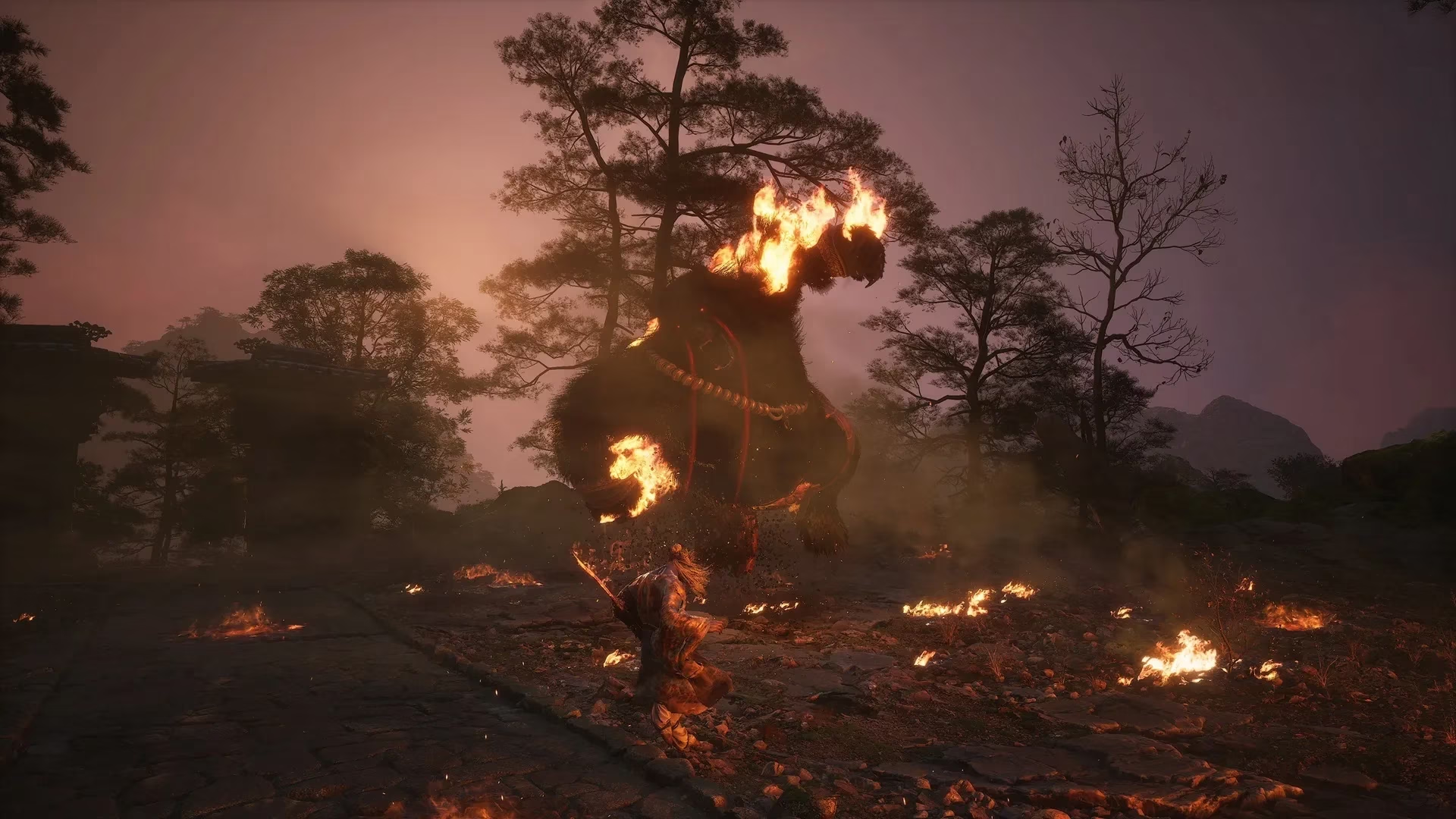
Even back in 2024, Black Myth looked and sounded stunning. The lush forests, the misty mountains, the way water ripples around your legs during the marsh fight – it’s pure artistic love. The voice acting (I played with Chinese audio) drips with personality, making every yaoguai feel like a character from the classic novel.
Now, in 2026, with the game fully released and polished, those early impressions have held up spectacularly. Game Science has delivered a title that respects your time, rewards your reflexes, and never forgets to make you feel like the mythical monkey king.
🤔 Is It a Souls-like? Yes, But Not in the Way You Think
If you’re a Souls veteran craving that punishing, methodical struggle, know this: Black Myth is a different beast. It’s still about reading enemies and managing resources, but it’s faster, flashier, and unashamedly empowering. You can break a boss’s momentum with a well-timed spell, transform to turn the tide, and perfect-dodge your way into feeling like a superhero.
For me, it scratched a deep itch – the desire for challenging, breathtaking action without the exhaustion. And at a time when the genre can feel saturated, Black Myth: Wukong stands tall, staff in hand, asking: “What if a Souls-like made you feel like a god instead of a peasant?” 🐒✨
Details are provided by Game Informer, whose long-running editorial coverage is useful for framing why Black Myth: Wukong lands differently than a traditional Souls-like: the game leans into responsiveness (forgiving dodge timing, spell-driven momentum breaks like Immobilize, and comeback-friendly transformations) so the challenge feels less like attrition and more like performance—rewarding mastery and aggression while still keeping familiar checkpoint-and-recovery stakes in the background.