
In 2025, Black Myth: Wukong continues to be celebrated as a landmark achievement in action RPGs, lauded for its breathtaking visuals, deep combat system, and compelling narrative. However, a persistent and notable point of contention among its vast player base remains the game's use of invisible walls. While the title masterfully crafts an immersive, linear journey, these unseen barriers have become a significant topic of discussion, often cited as a jarring element that interrupts the very immersion the game works so hard to build. How can a game praised for its world-building simultaneously employ a design element that so clearly reminds players they are in a constructed environment?
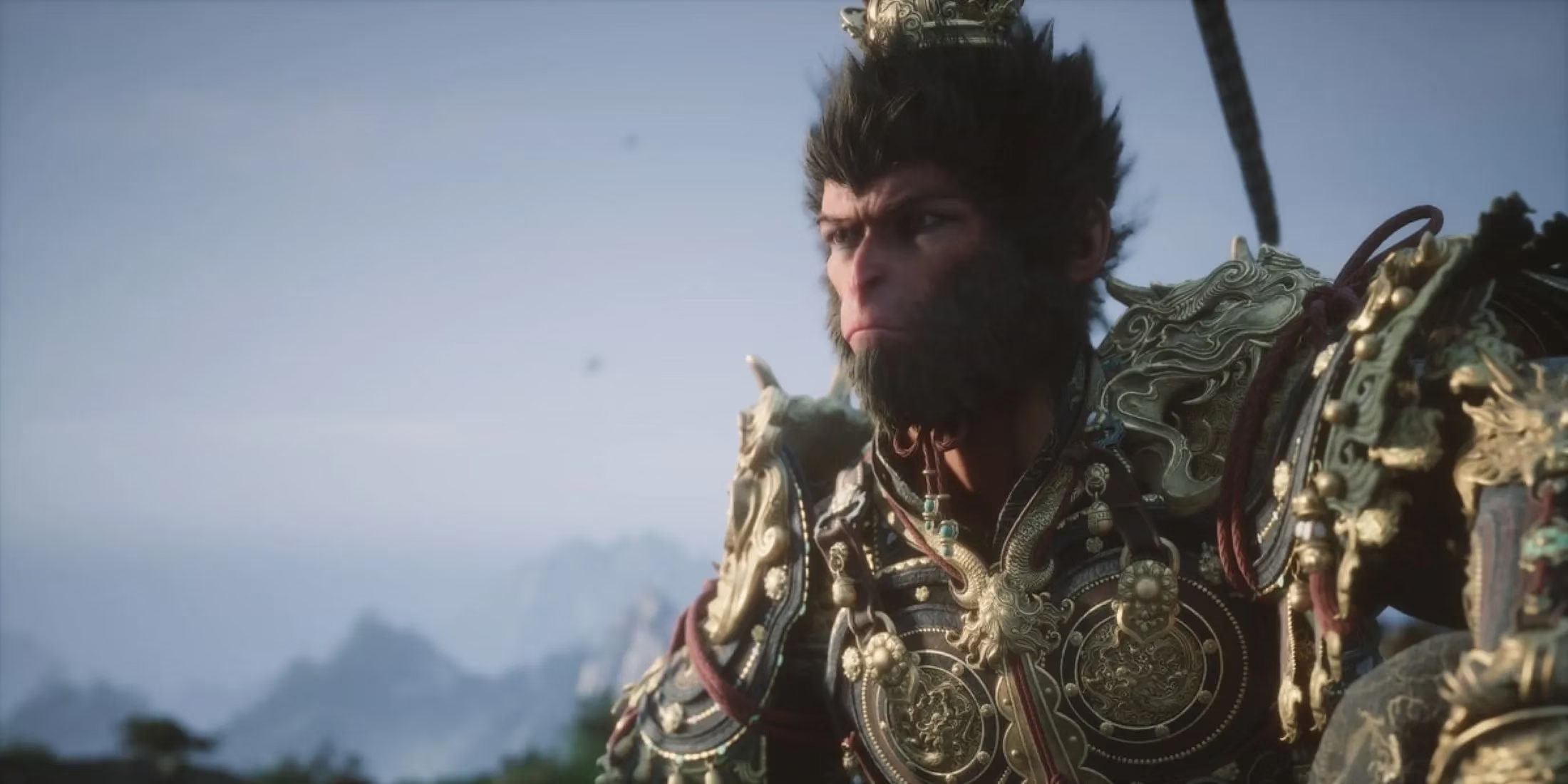
The core design philosophy of Black Myth: Wukong embraces a linear structure within a seemingly vast world, intentionally omitting a traditional map to foster a sense of personal discovery. This design choice forces players to observe environmental cues, remember landmarks, and feel a genuine connection to the journey. Yet, the frequent and sometimes unpredictable placement of invisible walls creates a direct conflict with this philosophy. Players, guided by curiosity and visual hints in the environment, are often met with an abrupt, unexplained stop. This is especially frustrating in the game's more intricate, labyrinthine sections, where the lack of a navigational aid compounds the confusion. Is the path blocked by lore, by design intent, or simply by an invisible pane of glass the game forgot to texture?
The community's frustration came to a head on platforms like Reddit, where a viral post featuring a video of a player's progress being halted by an invisible wall sparked widespread共鸣. The discussion revealed a spectrum of player sentiment:
-
Frustration with Immersion Breaks: Many players expressed that these barriers "degrade the experience." They argued that what could be a near-perfect, seamless world is constantly punctuated by reminders that it is, ultimately, a "3D box of code." The magic of being the legendary Sun Wukong is momentarily broken when you cannot leap onto a visually accessible ledge.
-
Perceptions of Design Intent: Opinions varied on why these walls exist. Some players attributed them to "mild laziness"—a quick fix for potential level geometry issues. Others felt their placement was "deliberate," a heavy-handed method of railroading players down a strictly intended path, which clashes with the game's exploratory presentation.
-
The Comparison Factor: Given the game's high-profile status and polish in other areas, the invisible walls stand out more starkly. Players familiar with other modern action RPGs often expect more elegant solutions for boundary setting, such as natural obstructions, lethal drops, or clear visual indicators of closed paths.
In response to these challenges, the player community has not just critiqued but also collaboratively brainstormed potential solutions that could reconcile the game's linear narrative with a more respectful approach to player agency. The suggestions aim to fix the problem without dismantling the developers' original vision.
Community-Proposed Solutions:
| Proposed Solution | Potential Benefit | Possible Drawback |
|---|---|---|
| Visual Cues (e.g., glowing barriers) | Clearly indicates impassable paths without breaking visual style. Maintains immersion better than an invisible wall. | Requires additional art and VFX work. Must be integrated seamlessly into the game's aesthetic. |
| More Natural Boundaries | Using fallen debris, dense mystical fog, or lethal terrain (e.g., bottomless chasms) feels more diegetic. | Can be more resource-intensive to design and implement than simple collision boxes. |
| Optional Mini-Map or Compass | Provides guidance for those who need it, reducing friction in complex areas. | Could "kill the sense of exploration" for purists, contradicting the intentional design. |
| Contextual Dialogue/UI Hint | Sun Wukong or a companion could comment ("This path is sealed by ancient magic") when approaching a dead end. | Overuse could become repetitive or feel patronizing. |
A popular middle-ground suggestion is the implementation of subtle visual cues. Imagine approaching a blocked mountain pass; instead of an invisible wall, a faint, shimmering barrier of celestial energy—consistent with the game's mythos—could become visible as the player draws near. This maintains the fantasy while communicating vital gameplay information. Another forward-thinking idea is a dynamic hint system that only activates after a player has been stuck in an area for a certain period, offering the best of both worlds: initial exploration freedom followed by guided assistance.
It is crucial to view this critique within the context of the game's monumental success. Since its launch, Black Myth: Wukong by Game Science achieved staggering milestones:
-
One of Steam's most-played single-player games ever, boasting peak concurrent players far exceeding 2 million.
-
📺 Dominance on Twitch, where it became the most-streamed and most-watched game of 2024, captivating global audiences with its spectacle.
-
🌍 A cultural phenomenon that successfully introduced Chinese mythology to a mainstream global audience with unprecedented production values.
The discussion around invisible walls, therefore, is not one of failure, but of a passionate player base engaging deeply with a game they care about. It highlights the evolving expectations of players in 2025, who seek not just graphical fidelity and compelling combat, but also world design that respects their intelligence and preserves immersion through clever, diegetic means. The invisible wall debate is, at its heart, feedback from an audience that sees the masterpiece Black Myth: Wukong already is and is passionately discussing how it could be even closer to perfect. Will Game Science address this in future updates or potential DLC? Only time will tell, but the conversation itself is a testament to the game's significant impact and the high standard it has set for the genre.