
In 2026, the gaming world is still awash with soulslikes, yet few have managed to leave a mark as indelible as Black Myth: Wukong. Developed by Game Science and inspired by the classic Chinese novel Journey to the West, this action RPG first launched in 2024 and immediately set itself apart. For anyone suffering from soulslike fatigue, it offered a refreshing twist. How did it manage that? By fusing challenging combat with rich Chinese mythology and innovative mechanics that felt genuinely new.
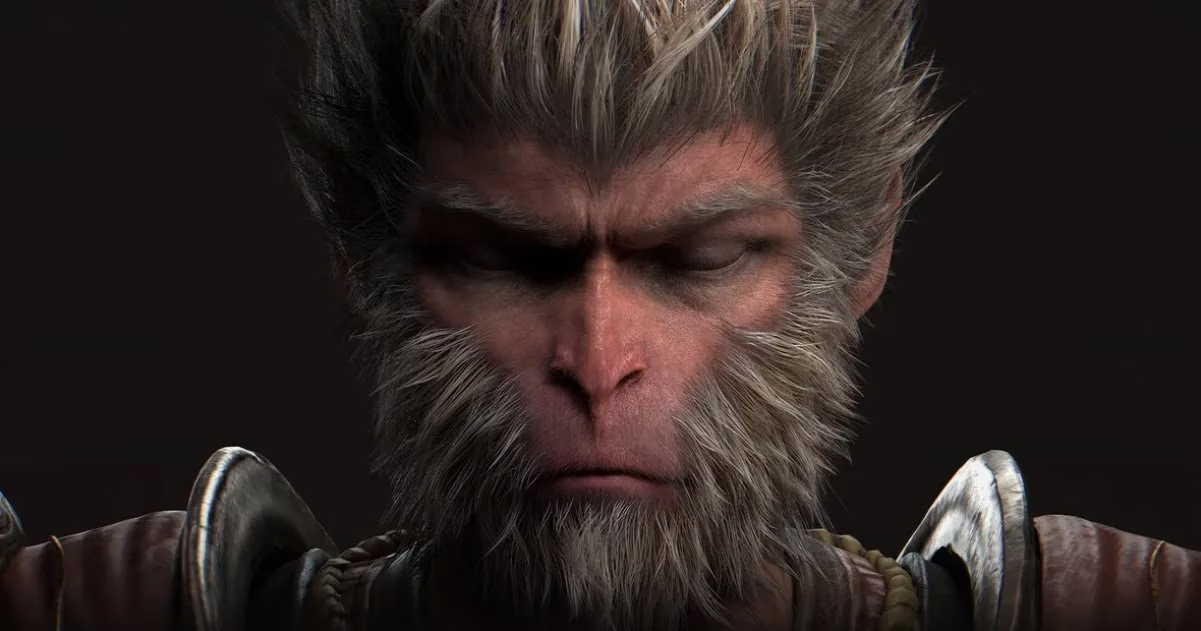
The game opens with players controlling the iconic Sun Wukong himself. After a brief tutorial and an epic duel with deities, the Monkey King is punched into a mountain, and the real journey begins. Players then take on the role of the Destined One, tasked by an old simian with recovering magical artifacts once owned by Wukong. These relics, it is said, will bring the trickster immortal back. From there, the world opens up into six distinct chapters, each a self-contained adventure filled with creatures from Buddhist and Chinese folklore. The areas are impressively lengthy—nearly a dozen hours each if one takes the time to explore—and they reward curiosity with hidden items, optional bosses, and breathtaking vistas.
Combat is the heart of the experience. The Destined One is loyal to his ancestor’s favored weapon: a magical, size-changing staff. At its base, it functions like a regular bo staff, capable of multi-hit combos. Landing enough hits or charging energy grants Focus points, which can be spent on powerful attacks that stagger even bosses. There is no parry and very little in the way of shields, so dodging is crucial. A perfectly timed dodge not only avoids all damage but also awards free Focus points—a win-win that adds a wonderful flow to every encounter.
Boss fights are where the game truly shines. They are challenging, cinematic, and flashy, often featuring foreboding second phases and creative attacks. Minor bosses, like a frog that croaks lightning, are optional or mandatory but always memorable. Major bosses, found at the end of each chapter, are bombastic set pieces with unique mechanics, such as sand-riddled wind. These battles are the most soulslike aspect of the game, yet they never feel unfair.
To aid in these fights, players have several tricks beyond the staff. Spells can freeze enemies—even bosses—or summon clones to harass foes. These cost mana, which only refills at checkpoints, so timing is key. Transformations, perhaps the most delightful mechanic, allow players to take the form of defeated enemies for a limited time, gaining their abilities and a separate health bar. Spirits offer similar but shorter transformations for a single attack, often providing great maneuverability or crowd control. Relics, obtained through chapter questlines, provide passive benefits that are especially useful against major bosses.
As players battle, they earn Sparks to advance skill trees. Respecing is free at any checkpoint, encouraging experimentation with different staff stances, spells, or transformations. This flexibility means that if a boss is giving someone trouble, they can easily change their build.
Visually, the game is stunning. Running on Unreal Engine 5, its environments are lush and mystical—from verdant forests to deserts with dynamic sand that leaves trails. Enemy design is equally fantastic, featuring anthropomorphic animals like wolf soldiers, snake warriors, and bizarre stone creatures. While some ranged enemies can be annoying, they never feel unfair. Technical issues do exist, such as occasional FPS drops in open areas or during flashy boss moves, and the game’s hefty download size (including a 70 GB update) can be a nuisance. Yet these are minor complaints in an otherwise polished experience.
The story is deliberately episodic. Each chapter tells its own tale, connected by the overarching goal of collecting artifacts. There is little in terms of a grand narrative beyond that, but the memorable characters and references to Journey to the West keep players engaged. Much like the source material, Wukong offers snippets of a larger whole rather than a step-by-step retelling.
| Aspect | Highlights |
|---|---|
| Combat | Staff combos, Focus points, perfect dodges |
| Bosses | Minor and major, cinematic, challenging |
| Mechanics | Spells, Transformations, Spirits, Relics |
| Progression | Free respec, multiple skill trees |
| Visuals | Unreal Engine 5, stunning environments |
| Story | Episodic, rich in folklore |
In 2026, Black Myth: Wukong remains a breath of fresh air. It is a meaty adventure with plenty of hidden quests and fun interactions for those who know where to look. One reviewer even bought and read the original book after playing. This action RPG was worth the wait and continues to be a standout title. So, if you haven’t yet embarked on this journey, what are you waiting for? 🐒⚔️