
In 2026, Black Myth: Wukong no longer needs to hide behind glossy trailers. The game has had time to settle into the conversation, and for an ordinary player the most useful question is not whether it copied FromSoftware, but what kind of ARPG it actually is. A 16-hour run through three chapters makes the answer clearer: it borrows recognizable Soulslike furniture, then rearranges the room around fast, cinematic martial-arts spectacle. The result is a game that can be called a Soulslike only with an asterisk.
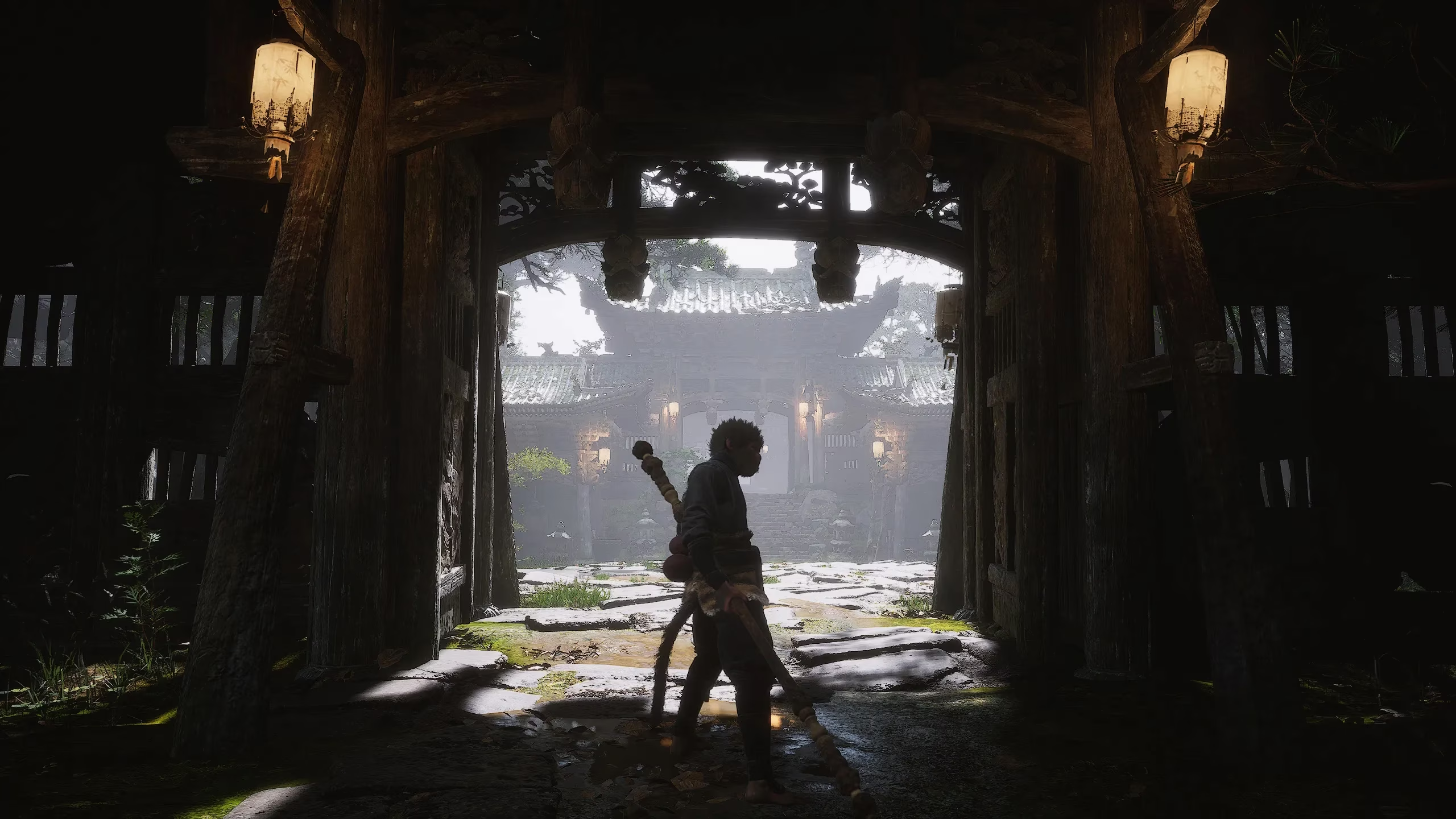
The Soulslike Question
At first glance, the Souls DNA is obvious. Buddhist shrines act as checkpoints and healing stations, and resting respawns enemies. The UI carries a familiar weight. Boss fights are bullish and punishing. Combat leans on timing, dodging, and counters, and panic-rolling tends to end badly. Those markers are real, and they explain why so many early conversations placed the game beside Elden Ring and other genre touchstones.
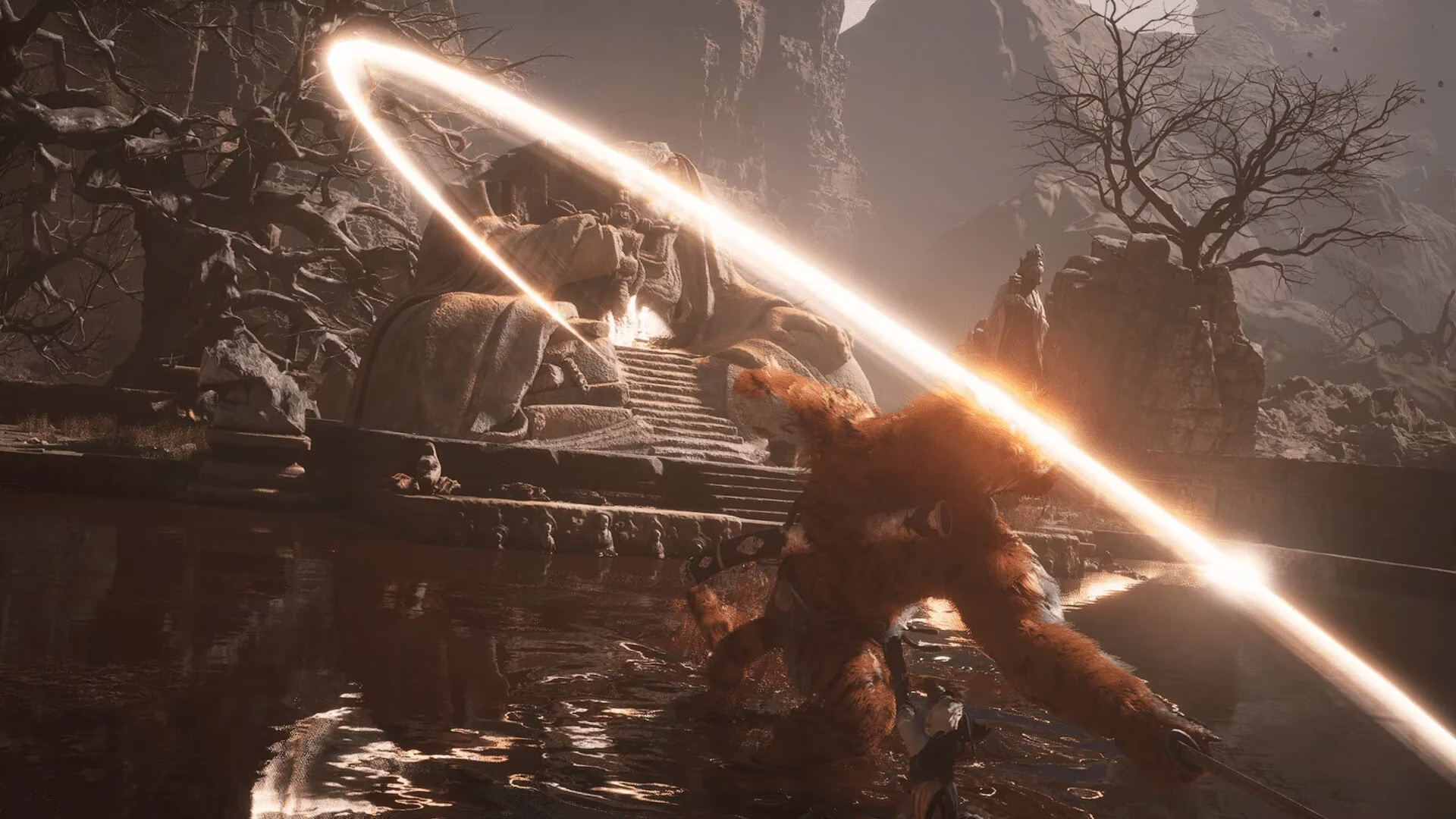
Yet the deeper a player goes, the less those markers dominate. Black Myth: Wukong is flashier than most Soulslikes, and its progression system pushes attention toward mastery rather than grim attrition. Dozens of moves open across at least 10 skill trees, spanning stances, magic, transformations, and foundational abilities. A spinning staff move can windmill away projectiles while closing distance on archers. Heavy attacks can send the monkey somersaulting into the air, absorbing damage before crashing down with a hyper-extended staff. From the opening hours, the player feels like a martial-arts master rather than a hapless scrub.
The stakes remain high. Jank can still sting when a heavy attack fails to register, or when a boss grab sweeps a player who looked clearly out of range. The health bar, however, is usually blasted less harshly than in a typical Soulslike. RPG-like numbers exist for critical hit chance, elemental resistances, and defence, but they are streamlined. The bigger draw is the skill trees and the feel of learning a weapon archetype. The primary weapons are a staff and a spear, so the journey is less about loot churn and more about mastering and upgrading those forms. Build experimentation is available for each boss through spells and transformations, but it never overwhelms the core rhythm.
Spectacle With a Cinematic Edge
Combat spectacle in Black Myth: Wukong often has the sweep of a PS5 open-world adventure, close to the energy of God of War. It stops short of the usual grab-attack and quick-time-event furniture, though some boss throws still force a player to watch a few painful seconds of being tossed up and smashed into the dirt. If the game is a Soulslike, it is probably the most cinematic Soulslike around.
| Soulslike marker | Black Myth approach |
|---|---|
| Shrine checkpoints | Present, with enemy respawns |
| Timing and dodging | Central, but more forgiving in health economy |
| Boss density | High, yet not a pure boss rush |
| Build depth | Streamlined stats, deep skill trees |
| Combat tone | Flashy, cinematic, martial-arts-forward |
One illusion worth dispelling in 2026 is the idea that Black Myth is predominantly a boss rush. Boss density is higher than in most games, but exploration matters. Optional pathways lead to eccentric NPCs, meditation spots, and mini-bosses. Chapter 2’s desert realm is far more expansive than Chapter 1, and most distant sights are reachable rather than painted backdrops. A player can feel a little lost among the pathways, yet every route tends to yield some reward. Crumbling forts, monasteries, and temples nestled among harsh rocks make the detours a joy.
A Chinese Mythological Beast
Perhaps the most distinctive spin is that Black Myth: Wukong is both made and set in China. Games about the Three Kingdoms period appear regularly, but most are Japanese-made. Even adaptations of Journey to the West have often come from Japanese or Western studios. A Chinese cultural twist on a Chinese novel therefore feels genuinely novel. Buddhist imagery, gorgeous animated mini-movies between chapters, poetry and lore entries, a cast of eccentric characters, and Mandarin dialog all reflect a culture that had rarely spoken for itself in this medium. Many players strongly prefer the Mandarin audio to the English dub, and it is easy to understand why.
By 2026, the game’s reputation has moved beyond the trailer question. It owes a bit to FromSoftware, but it is also its own mythological beast. At release, it looked like a Game of the Year contender; with hindsight, its staying power is easier to judge. The combat is flashy, the exploration is richer than expected, and the cultural texture gives it an identity that few Soulslikes can match. For a regular player, that combination remains the real appeal: not a clone, not a pure boss rush, but a cinematic ARPG with a staff, a myth, and a confident swagger of its own. 🐒✨",
"content_word_count